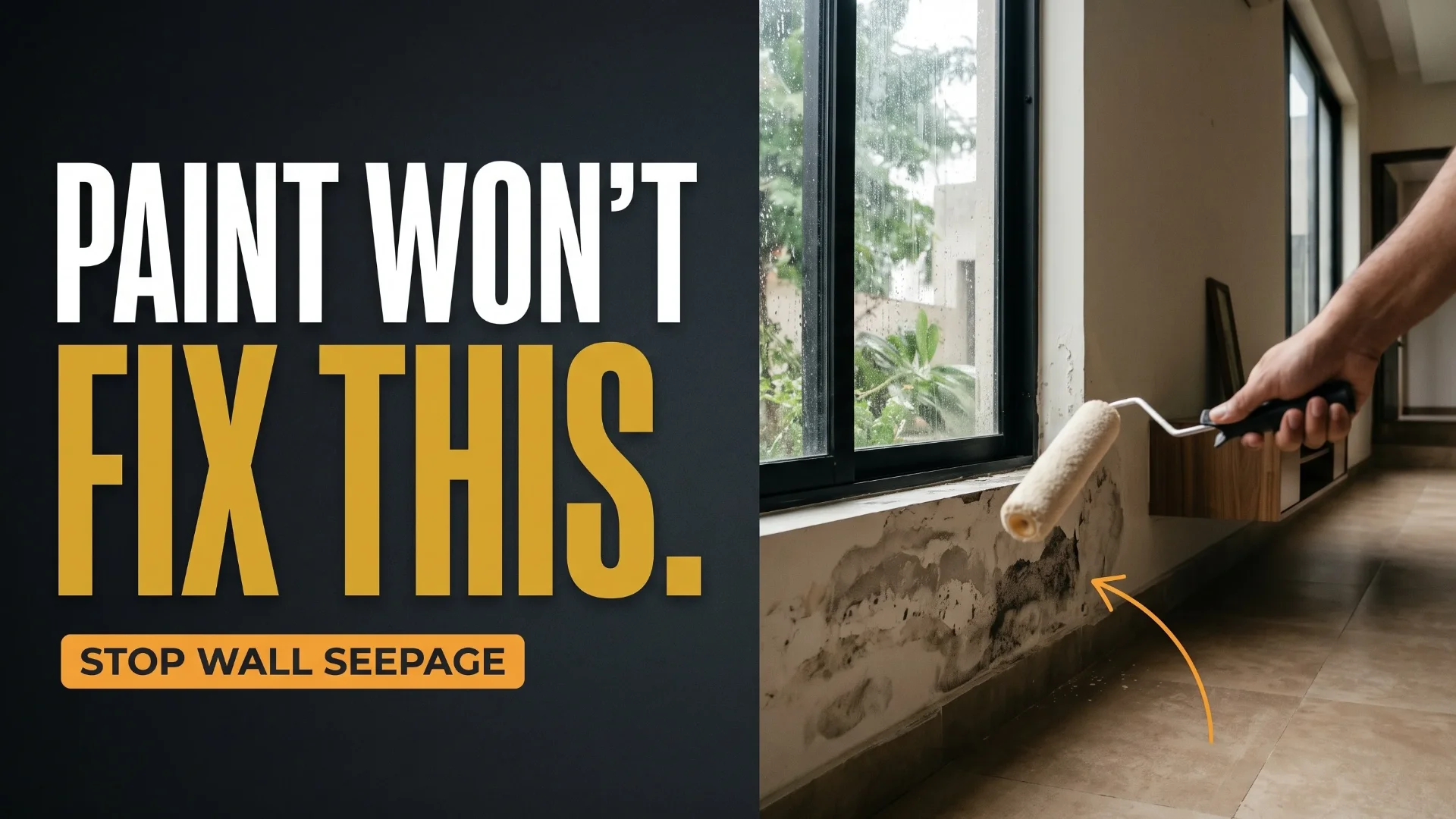
A damp patch that returns after painting usually needs a better investigation, not another coat of paint. The visible mark may be some distance from the point where water entered the building.
The right wall seepage solution in Pakistan depends on the source: a leaking pipe, rain penetration, moisture from the ground or condensation can require different repairs. A useful quotation identifies the cause, describes the repair and explains how the result will be checked before redecoration.
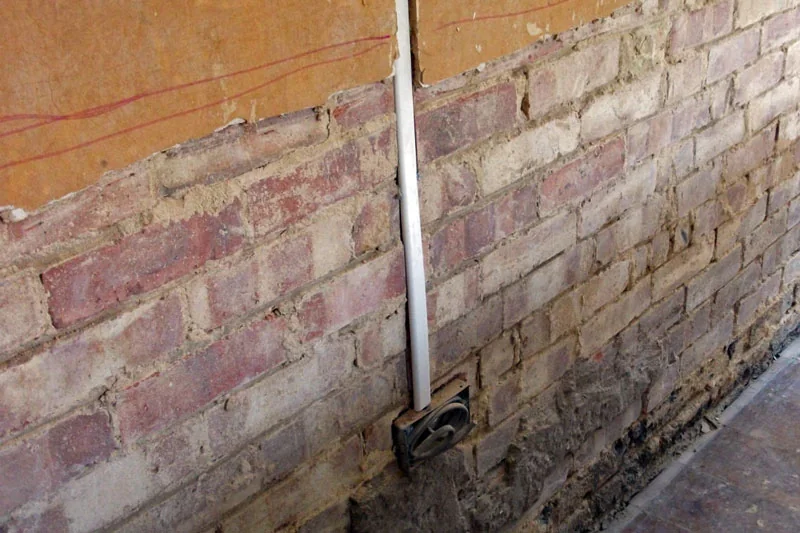
Plaster-removed-rising-damp.jpg — Kebabknight · CC BY-SA 3.0. Resized and converted to WebP; no cropping.
Seepage is a symptom, not a complete diagnosis
“Seepage” is often used as a general description for damp walls. Start by recording where the patch appears, when it grows and what happens nearby. Does it change after rainfall, shower use or a water-tank overflow? Is the opposite side of the wall a bathroom or an exposed façade?
Photograph the affected area with dates. Mark its boundaries so changes are easier to compare. A site inspection may need targeted plumbing tests, checks of external details or moisture monitoring; a photograph alone cannot establish the cause.
The US EPA's moisture-control guidance treats drainage, plumbing, building assemblies and humidity as connected issues. Its technical principles are useful background, while the repair specification must suit the actual Pakistani building.
Four causes worth investigating
| Possible source | Clues to investigate | What the investigation should establish |
|---|---|---|
| Plumbing leakage | Damp near a bathroom, kitchen or supply route | Which supply, waste or joint is leaking |
| Rain penetration | A patch changes after rainfall | Entry points at walls, windows, parapets, roofs or balconies |
| Ground-related moisture | Damage around the base of a wall | Ground levels, drainage, wall construction and moisture pathways |
| Condensation | Moisture on cold surfaces or in enclosed areas | Humidity, surface conditions, ventilation and patterns of use |
These clues overlap. Salts or low-level damage do not, by themselves, prove rising damp. Historic England's guidance on investigating moisture emphasizes understanding the building before selecting treatment, particularly for older construction.
Match the repair to the water pathway
For a plumbing leak, locate and repair the defective component, test the relevant system and assess affected finishes. Applying a wall coating while the leak continues leaves the underlying problem in place.
For rain penetration, inspect the external route. An open joint, defective sill, poorly resolved parapet or failed balcony junction may need a local construction detail repaired. The scope should address how water is collected, drained and kept out at that location.
For ground-related damp, examine drainage, external ground levels and existing moisture protection. Older walls may need a different approach from newer construction. Do not choose an injected treatment merely because it is the first product offered.
Where condensation contributes, review moisture production, ventilation and cold surfaces. A repair plan may involve several changes rather than a single waterproofing material.
Why a waterproofing product is only part of the work
Ask the specialist to identify the substrate, surface preparation, junction treatment, protection and finishing requirements. Check whether the proposed materials are intended to work together and whether the installer will follow their current technical instructions.
Pay attention to access. A quotation assuming an accessible exterior wall can change substantially if scaffolding, opening-up or work on an adjoining property is required. Record these conditions before agreeing on a price.
Keep photographs of concealed repairs and a record of product names and application dates. Those records are useful if the same area needs inspection later.
What affects wall waterproofing costs in Pakistan?
There is no reliable national price for “fixing a damp wall” without a defined cause and scope. The visible patch size is only one part of the job: the source may require work elsewhere.
Use this structure when requesting local quotations:
| Cost component | Detail to request |
|---|---|
| Investigation | Visits, tests and any opening-up included |
| Access and protection | Scaffolding, room protection and temporary arrangements |
| Source repair | Plumbing, external detailing, drainage or other corrective work |
| Substrate treatment | Removal, repairs and the specified moisture-control system |
| Reinstatement | Plaster, tiles, joinery or paint included |
| Verification | Tests, follow-up inspection and warranty conditions |
Request a dated, itemized PKR quotation in your city. Compare totals only after checking that each bidder includes the same work. This article intentionally avoids an unsupported per-square-foot rate that could conceal investigation and access costs.
Repaint after the repair is ready
Ask how the team will confirm that the source is controlled and the substrate is ready for the selected finish. A fixed promise to repaint after a few days may be inappropriate where moisture remains within the assembly.
Agree who will inspect the repair, what observations or tests will be recorded and what happens if damp returns. A warranty should identify the covered system, duration, exclusions and maintenance obligations.
Frequently asked questions
Can waterproof paint permanently fix wall seepage?
It cannot be assumed to correct an active leak or an unresolved water pathway. A coating may form part of a specified repair system, but it should follow diagnosis and appropriate preparation.
Is damp near the floor always rising damp?
No. Leaks, high external ground, poor drainage and other sources may produce similar damage. Investigate the building and its surroundings before choosing a treatment.
Should the entire wall be replastered?
The extent depends on the affected material, contamination, condition and repair system. Ask the surveyor or specialist to define the necessary removal rather than replacing everything by default.
Resolve the cause before restoring the appearance
For homeowners in Multan and across Pakistan, the most useful first investment is a clear diagnosis and repair scope. That gives contractors something consistent to price and gives you a way to judge completion.
Discuss your repair or renovation with ANU Architects. For wider planning guidance, explore the ANU Journal.