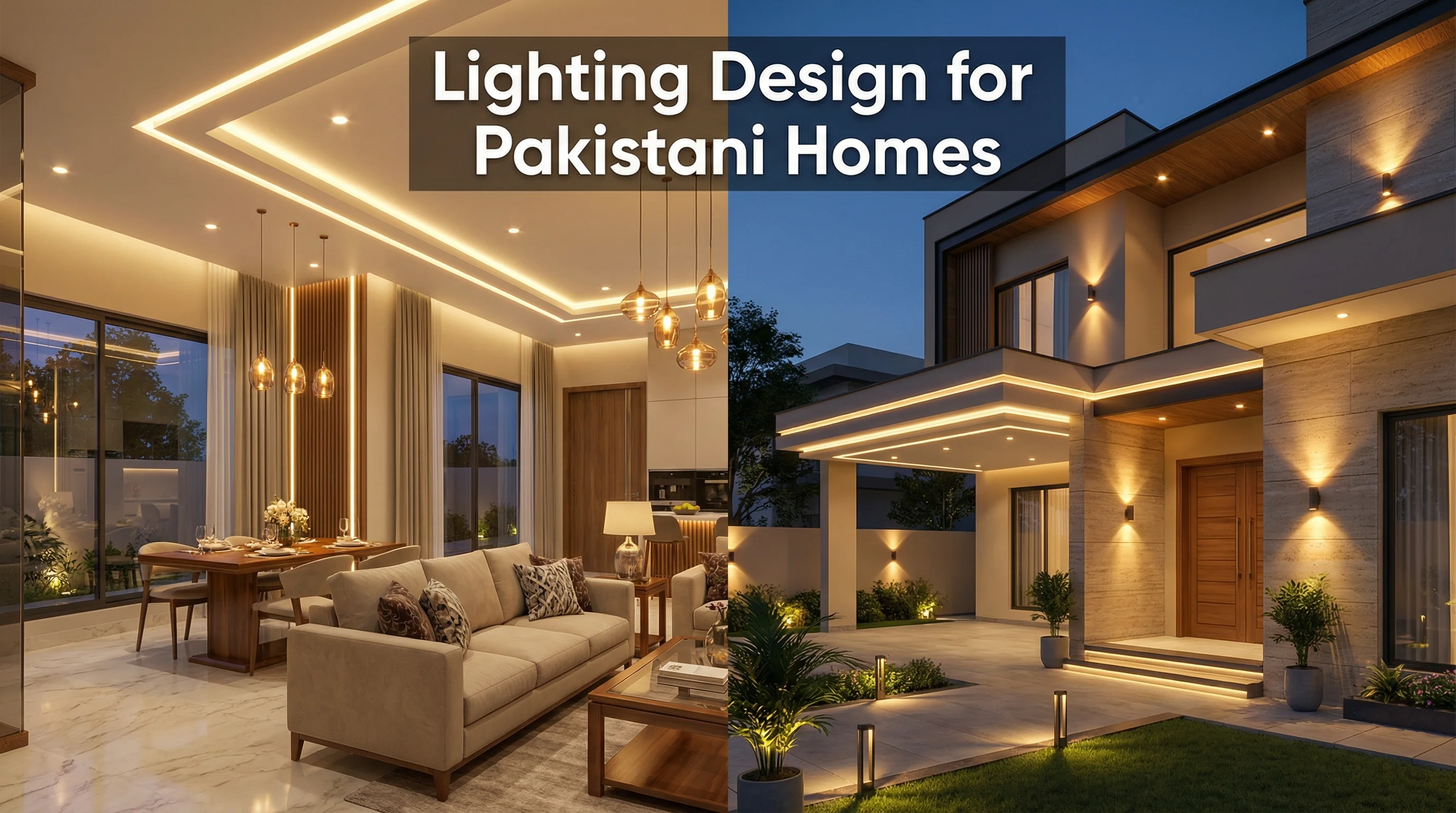
Lighting is one of the most underestimated elements in residential design in Pakistan. Many homes rely on random placement of lights after construction, which leads to poor visibility, wasted energy, and uncomfortable living spaces. Proper lighting design is not just about brightness; it is about creating balanced, functional, and visually pleasing environments that support daily activities while enhancing architectural features.
Lighting design is the strategic planning of artificial and natural light to support function, comfort, and aesthetics. It involves selecting the right type of fixtures, light intensity, color temperature, and placement for each space. In residential architecture, lighting design should be integrated at the planning stage, not treated as an afterthought.
Pakistan’s climate, lifestyle, and construction practices make lighting design especially important due to:
- Long daylight hours and intense sunlight
- Frequent use of indoor spaces during evenings
- Power consumption concerns and rising electricity costs
- Mixed-use spaces such as drawing rooms, lounges, and family areas
Provides overall illumination for a space. Common examples include ceiling lights, LED panels, and recessed downlights. Ambient lighting ensures safe movement and general visibility.
Focused lighting for specific activities such as cooking, reading, studying, or grooming. Examples include under-cabinet kitchen lights, study lamps, and vanity lights in bathrooms.
Used to highlight architectural features, textures, artwork, or wall finishes. Cove lighting, wall washers, and spotlights are commonly used for this purpose in modern Pakistani homes.
These areas require layered lighting. Ambient lighting provides general brightness, while accent lighting enhances ceilings, TV walls, and decorative elements. Dimmable lights are recommended to adjust mood for gatherings and relaxation.
Bedrooms should use warm lighting to promote relaxation. Bedside task lights, soft ceiling lights, and minimal accent lighting work best. Avoid harsh white lights that strain the eyes at night.
Kitchens require bright, functional lighting. Task lighting under cabinets is essential for food preparation, while ambient ceiling lights ensure even illumination. Neutral to cool white lighting is preferred for clarity and hygiene.
Balanced lighting is critical. Vanity lights around mirrors reduce shadows on the face, while ceiling lights provide overall brightness. Waterproof fixtures should be used in wet areas.
These areas often get neglected but are important for safety. Step lights, wall-mounted fixtures, or concealed LED strips improve visibility and add architectural interest.
Good lighting design combines artificial lighting with natural daylight. Architects optimize window placement, skylights, and courtyards to reduce daytime electricity usage while maintaining thermal comfort. In Pakistan’s climate, controlling glare and heat gain is equally important through shading devices and proper orientation.
Light color temperature affects mood and comfort:
- Warm white (2700K–3000K): bedrooms and lounges
- Neutral white (3500K–4000K): living rooms and dining areas
- Cool white (5000K–6500K): kitchens, bathrooms, and workspaces
LED lighting is now standard in modern Pakistani homes due to its low energy consumption, long lifespan, and reduced heat output. Proper lighting design reduces the number of fixtures required while maximizing brightness and efficiency, helping homeowners control electricity bills.
- Installing lights without a lighting plan
- Using the same light type in every room
- Ignoring task lighting in kitchens and study areas
- Overusing cool white lights in bedrooms
- Poor switch placement and lack of zoning
Lighting affects ceiling heights, false ceiling design, wall finishes, and furniture placement. When architects and interior designers plan lighting early, it results in cleaner detailing, concealed wiring, and better visual balance throughout the house.
ANU Architects integrates lighting design into architectural and interior planning from the earliest stages. By coordinating layouts, ceiling details, and fixture selection, the firm ensures homes that are comfortable, visually balanced, and energy efficient. Each space is designed with a clear lighting purpose rather than relying on random fixtures after construction.
Effective lighting design transforms a house from a basic structure into a comfortable, functional, and visually appealing home. For Pakistani homeowners, thoughtful lighting planning improves daily living, reduces energy costs, and enhances architectural quality. Investing in proper lighting design at the planning stage ensures long-term comfort and value.