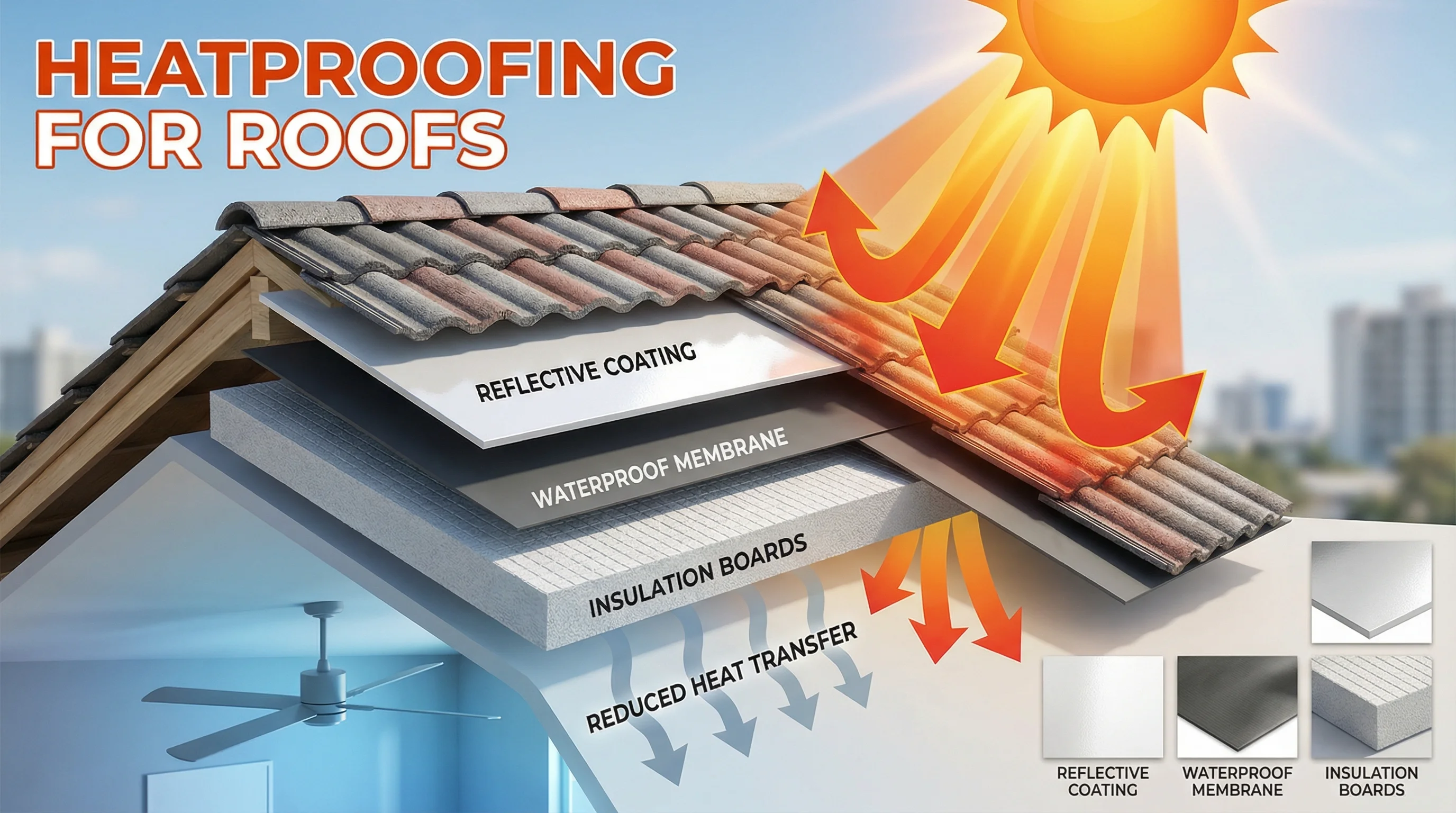
Pakistan faces increasingly harsh summers, with temperatures in cities like Multan crossing 45°C. Roofs absorb most of this heat, raising indoor temperatures, increasing AC load, and impacting building comfort. Roof heatproofing helps reduce heat transfer, maintain cooler indoor temperatures, and lower utility bills. This guide explains the most practical heatproofing materials and methods used in Pakistan.
Heat reflective or solar reflective coatings use chemical compounds that reflect UV and infrared radiation. They form a protective layer that reduces thermal absorption on rooftops.
- Acrylic reflective coatings
- Elastomeric roof coatings
- Ceramic-based coatings
- Cost-effective
- Quick application
- UV protection
- Works on concrete, metal, and tiles
- Requires periodic reapplication every 3–5 years
- Effectiveness varies by brand
PU foam is a highly effective insulation material that expands into gaps and forms a seamless insulation layer.
- High R-value (thermal resistance)
- Waterproofing and insulation combined
- Reduces heat transfer significantly
- Suitable for irregular roof surfaces
- Higher upfront cost
- Requires skilled installation
- UV protection top coat is recommended
Expanded (EPS) and Extruded (XPS) Polystyrene sheets are popular insulation boards used under roof screed and above slab structures.
- High insulation performance
- Long lifespan
- Effective for new construction
- Works well with lightweight concrete topping
- Not ideal for retrofit without removing existing screed
- Requires proper sealing to avoid moisture trapping
Bituminous membranes are used primarily for waterproofing, but when paired with insulation layers they also reduce thermal gain.
- Waterproofing and insulation solution
- High durability
- Good for flat concrete roofs
- More expensive than coatings
- Professional installation required
This traditional method involves mud layers mixed with straw spread on rooftops. Although declining in modern structures, it is still used in rural areas for its low cost.
- Natural insulation
- Low cost
- Good thermal mass control
- Requires maintenance
- Adds roof load
- Not suitable for modern RCC slabs without reinforcement considerations
Clay tiles or concrete pavers installed on rooftops create an air gap that reduces direct heat transfer to the slab.
- Durable
- Low maintenance
- Air cavity reduces conduction
- Aesthetic finish options
- Moderate cost
- Increases dead load
- Requires proper drainage planning
Effectiveness varies by method and building type. PU foam and EPS/XPS sheets offer the highest thermal insulation, while reflective coatings are more affordable for retrofit solutions.
Homeowners should evaluate:
- Roof condition and leaks
- Waterproofing requirements
- Load capacity for tiles or pavers
- Budget and lifespan goals
- Indoor cooling needs
ANU Architects evaluates each roof’s structure, material, and climate exposure before recommending solutions. We combine insulation with waterproofing when necessary, ensuring improved thermal comfort and long-term performance for both residential and commercial projects.
Heatproofing a roof is no longer optional in Pakistan’s climate. The right combination of reflective coatings, insulation boards, or spray foam can significantly lower indoor temperatures and reduce energy consumption. Understanding available materials and methods helps homeowners invest wisely and improve building comfort and lifespan.