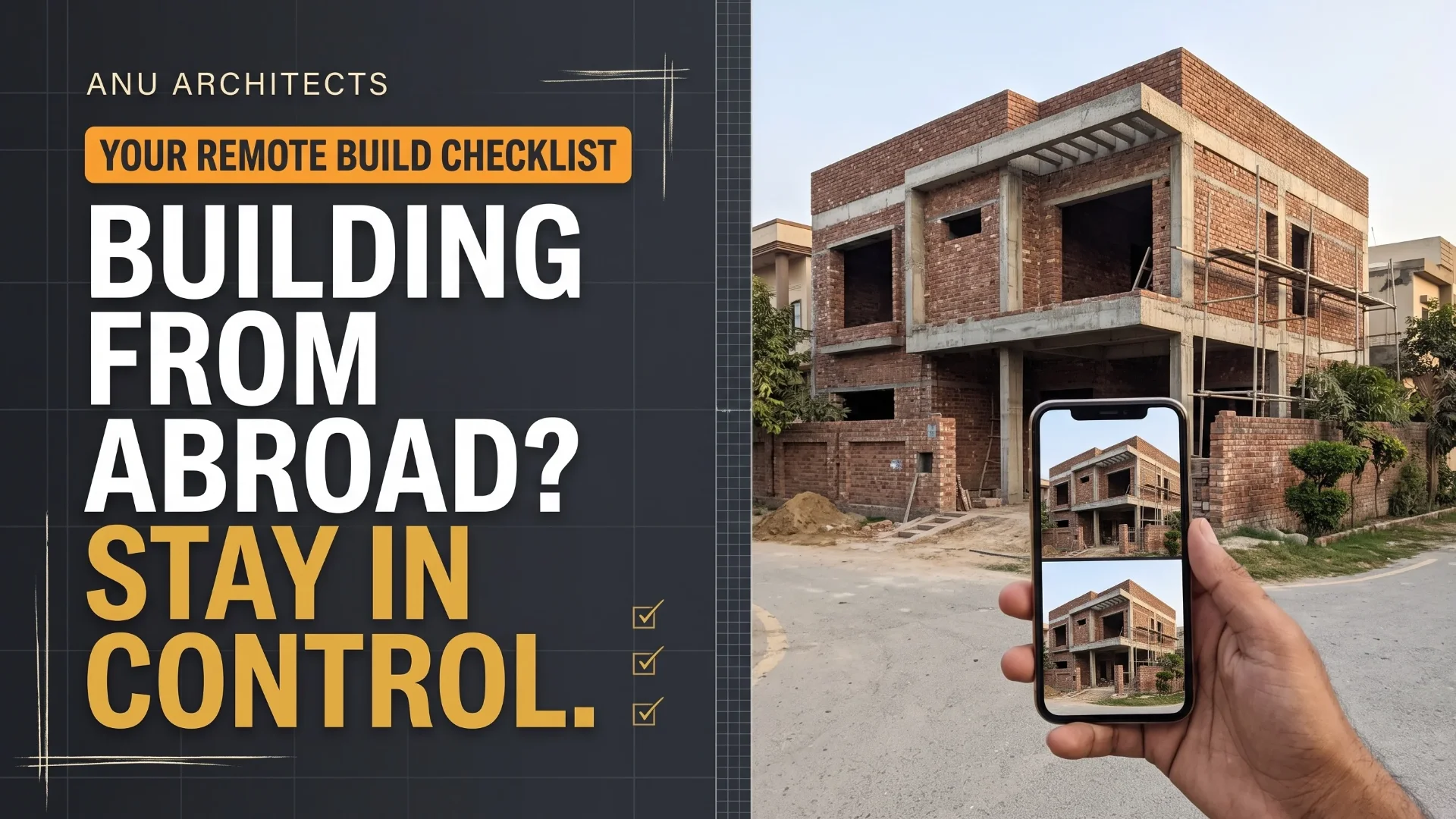
Building a house in Pakistan while living overseas is partly a construction project and partly a system for making decisions at a distance. A stream of attractive site photographs cannot replace a clear scope, a responsible local team and records of what has been approved.
The practical approach is to define who designs, who builds, who checks and who authorizes payment before work starts. Then use a repeatable reporting process that lets you understand progress without depending on scattered calls and forwarded messages.
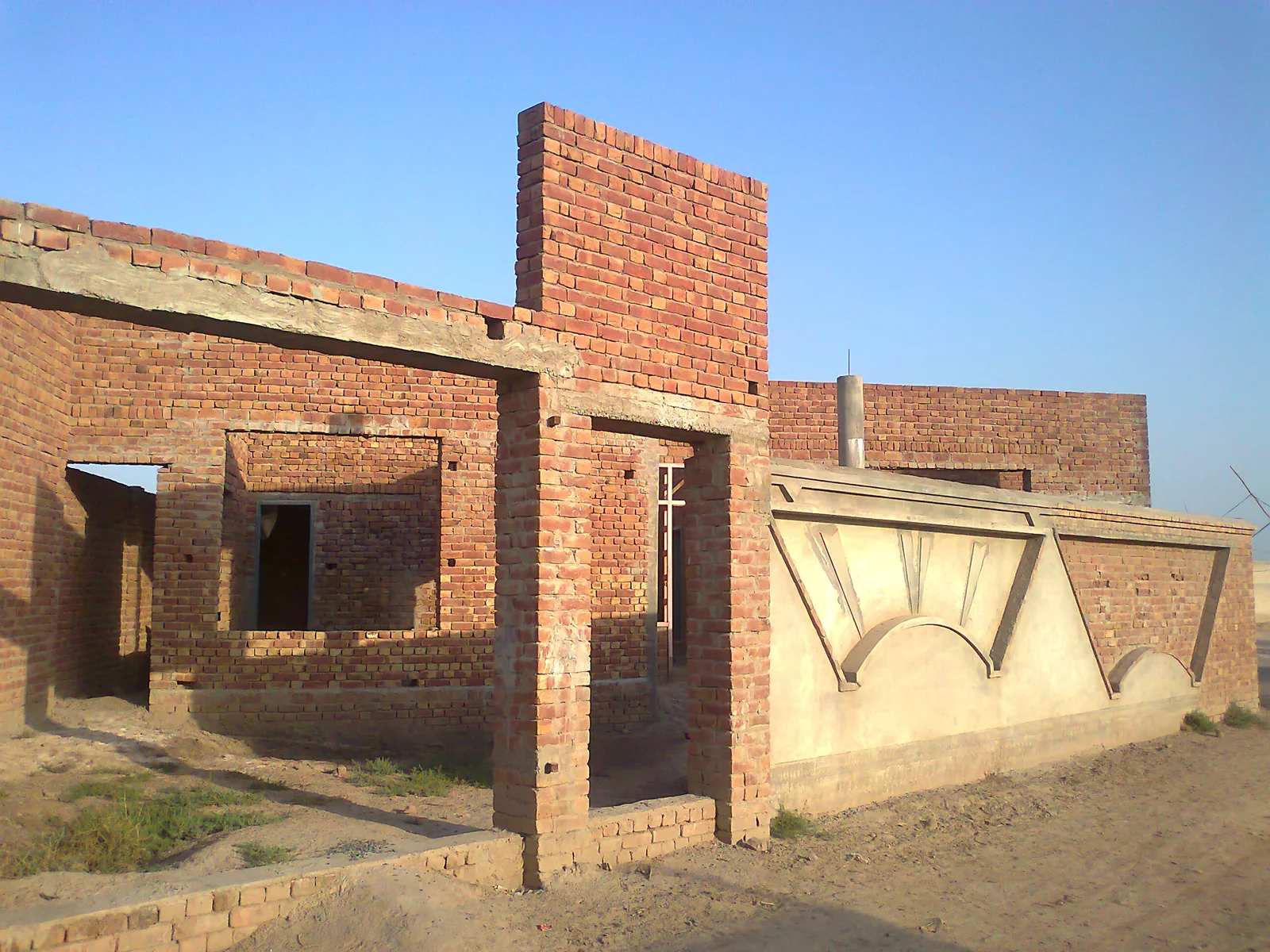
Gill house under construction in Makhdoom Rashid - panoramio.jpg — Saif Gill · CC BY 3.0. Resized and converted to WebP; no cropping.
Establish the project before appointing the builder
Confirm your plot information, site conditions and the relevant authority's requirements through appropriate local professionals. Give the design team a written brief covering the intended occupants, room requirements, budget priorities and expected level of finish.
Include future use. A home occupied by parents now and by the wider family later may need different storage, access and room arrangements. These decisions are easier to resolve during design than through instructions sent from overseas after construction begins.
Ask what each professional appointment includes. Architectural design, structural engineering, services design, site inspections and daily supervision are separate responsibilities unless the agreed scope combines them.
Create a responsibility and approval map
Write down the people authorized to answer each kind of question. Avoid giving the contractor, a relative and several consultants overlapping authority without a clear decision route.
| Decision or task | Person to identify before starting |
|---|---|
| Design clarification | Lead designer and relevant consultant |
| Daily site coordination | Appointed site manager or contractor representative |
| Inspection of completed work | Appropriate consultant or independent inspector |
| Approval of a material substitution | Named design representative and owner, as agreed |
| Approval of extra cost | Owner or explicitly authorized representative |
| Payment processing | Named person using documented approvals |
A relative may provide valuable local support, but availability and technical qualifications are different things. Be explicit about what you are asking that person to verify.
Issue one coordinated set of documents
Keep drawings, specifications, the contract, the bill of quantities and the programme in an organized shared folder. Each drawing should show a revision and date so the site team can identify the current issue.
Maintain a separate folder for superseded documents. If a bathroom changes, record the effect on plumbing, waterproofing, tiles and cost rather than forwarding only the revised image.
For a starting point, read ANU's house-layout planning guide. The remote reporting system should support an already coordinated design, not substitute for one.
Agree on a useful weekly report
A short, consistent report is easier to review than hundreds of unrelated photographs. Request the same structure each week:
- Work planned for the week and work actually completed.
- Dated photographs identified by room, floor or drawing reference.
- Inspections and tests completed, with records attached.
- Materials delivered, including quantities and relevant delivery documents.
- Decisions needed from you, with a response date and consequences of delay.
- Changes to the forecast completion date and expenditure.
Add a regular call at a time that works across time zones. Circulate decisions afterward in writing. A video tour is useful for context, but it cannot by itself prove the quality of concealed reinforcement, wiring or waterproofing.
Define inspection points before work is concealed
Ask the relevant consultants to identify hold points in the programme. These might include inspections before concrete placement, checks before services are covered and testing before finishes close an area.
Agree on notice periods and who can release each hold point. If the inspector is told only after the next trade has started, verification becomes harder and may require opening completed work.
Request records that relate to specific work locations. An unlabelled test photograph or a material certificate with no connection to the delivered batch provides limited reassurance.
Control material changes and payments
Use a material approval register for items that affect appearance, performance or budget. Record the proposed product, specification, supplier, agreed price basis and approving person. Where appearance matters, review samples under suitable conditions rather than relying entirely on a phone screen.
For payments, follow the agreed contract process and obtain the specified evidence of measured or completed work. Keep invoices, inspection records and approvals together. Document variations before ordering or executing them whenever possible, including any effect on time.
If financing is relevant, the State Bank of Pakistan describes Roshan Apna Ghar as a route for eligible non-resident customers to buy, build or renovate. Check current eligibility and terms with a participating bank; finance arrangements do not replace project supervision.
Plan handover while the site is still active
Before releasing the final payment under the agreed process, organize a documented inspection and a list of outstanding items. Collect approved revisions, test records, equipment manuals, warranty information and maintenance contacts.
Ask the team to demonstrate water systems, electrical controls and installed equipment. Identify who will attend if an issue emerges after occupation and how that issue should be reported.
Frequently asked questions
Can I manage everything through WhatsApp?
Messaging can support communication, but keep approved documents, instructions, variations and payment records in a structured project archive. Important decisions should be easy to retrieve without reconstructing a long conversation.
Is a CCTV camera enough for remote supervision?
It can show activity, but does not replace measurements, technical inspections or testing. Treat cameras as a supplementary view of the site.
How often should I visit Pakistan during construction?
There is no single schedule that suits every project. Agree on the decisions and inspections requiring your presence, then arrange local authority and professional responsibilities for periods when you are away.
Build a clear process around the local team
Remote construction becomes more manageable when every update answers three questions: what happened, how was it verified and what decision is needed next?
Contact ANU Architects to discuss your proposed home and confirm the design, reporting and supervision scope available for your location.