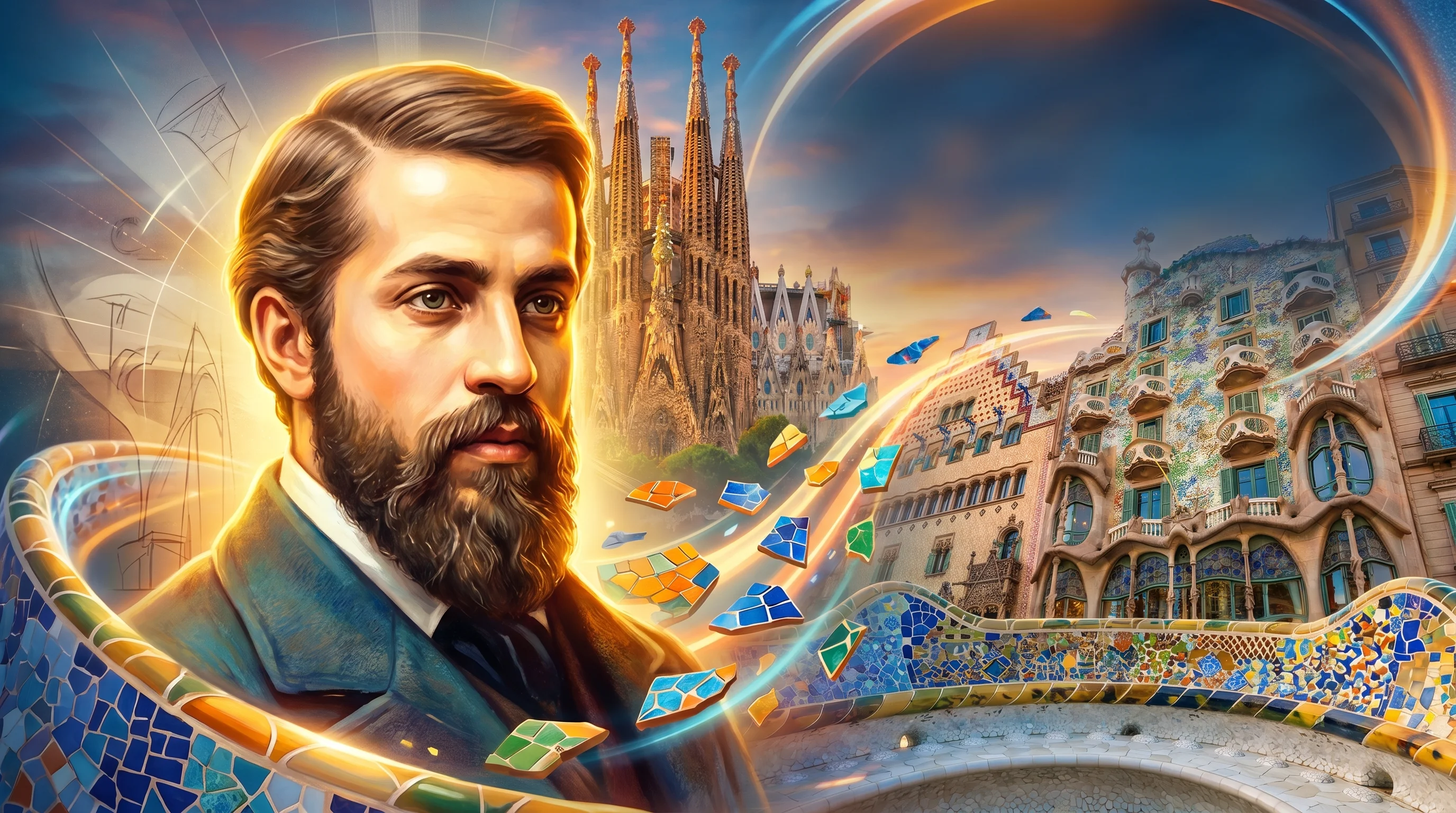
Antoni Gaudí is one of the most celebrated architects in history, known for transforming architecture into a form of artistic expression. His designs broke away from traditional geometry and embraced organic, flowing forms inspired by nature. Gaudí’s work remains a major influence on modern architecture, demonstrating how creativity, engineering, and artistic vision can come together to create timeless structures.
Born in 1852 in Catalonia, Spain, Gaudí showed an early interest in craftsmanship and natural forms. He studied architecture in Barcelona, where he later developed a distinctive style that combined Gothic elements with innovative structural techniques. His work was deeply influenced by religion, nature, and Catalan culture.
Gaudí’s architecture is instantly recognizable due to its unconventional approach. Instead of straight lines and rigid forms, he used curves, asymmetry, and intricate detailing.
Key characteristics of his style include:
- Organic shapes inspired by plants, animals, and natural landscapes
- Use of colorful mosaics and ceramics
- Integration of structure and decoration
- Innovative use of light and space
His designs often feel alive, as if they are growing naturally rather than being constructed.
Gaudí’s portfolio includes some of the most iconic buildings in the world:
A massive basilica in Barcelona that remains under construction even today. It is known for its towering spires, symbolic details, and complex geometry.
A public park featuring colorful mosaics, curved benches, and imaginative architectural elements integrated into the landscape.
A residential building famous for its wave-like façade, vibrant colors, and skeletal forms inspired by marine life.
Known for its stone façade and flowing lines, this building showcases Gaudí’s ability to merge functionality with artistic expression.
Gaudí was not just an artist but also a skilled engineer. He developed advanced techniques such as catenary arches and structural models to ensure stability while maintaining creative freedom. His methods allowed him to design complex shapes that were both visually striking and structurally sound.
Gaudí’s work has influenced architects around the world by encouraging experimentation and breaking traditional design rules. His emphasis on nature-inspired design and sustainability resonates strongly with modern architectural trends, especially in climate-responsive and organic architecture.
Architects today can learn several key lessons from Gaudí’s approach:
- Design should be inspired by nature
- Creativity and functionality must go hand in hand
- Attention to detail enhances user experience
- Innovation can redefine traditional architecture
While Pakistan’s architecture differs in climate and culture, Gaudí’s principles can still be applied. Organic design, natural ventilation, integration of light, and creative use of materials can inspire modern residential and commercial projects in cities like Multan.
Antoni Gaudí remains a timeless figure in architecture, known for pushing the boundaries of design and engineering. His work continues to inspire architects to think beyond conventional limits and create spaces that are both functional and artistic. By studying his philosophy, modern architects can develop innovative solutions that combine creativity, sustainability, and practicality.